UNCTAD · CC BY-SA 2.0 · Wikimedia Commons · Source · License
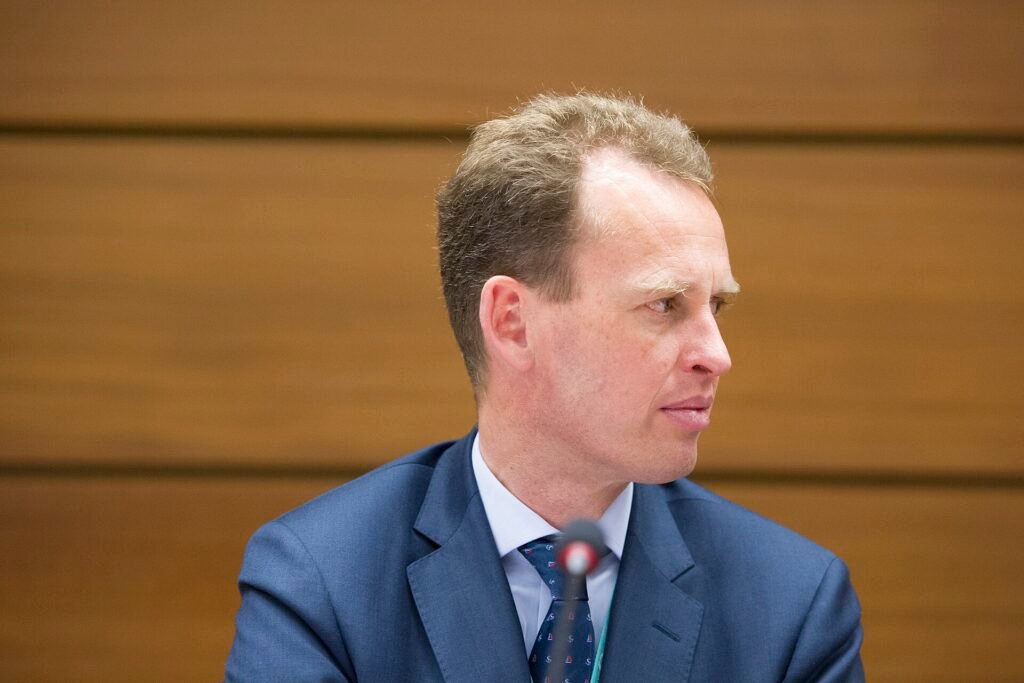
Frank Elderson, member of the Executive Board of the European Central Bank (ECB), warned of the catastrophic risks that the destruction of natural capital poses to the financial system and macroeconomic resilience during his keynote speech at the ‘Finance and Biodiversity Day’ at the 17th UN Biodiversity Conference (COP17) in Yerevan on October 26, 2026. Pointing out that 75% of corporate loans in the eurozone depend on ecosystem services, he urged a shift in perspective, viewing nature conservation not as a mere cost, but as an essential investment to safeguard economic productivity and price stability.
Reevaluating the Economic Value of Natural Capital at COP17
Frank Elderson, Executive Board member and Vice-Chair of the Supervisory Board of the ECB, delivered the opening keynote at the ‘Finance and Biodiversity Day’ at COP17 in Yerevan, Armenia, on October 26, 2026. Elderson noted that despite four years having passed since the adoption of the Kunming-Montreal Global Biodiversity Framework in 2022, the transition to tangible action remains sluggish, and he clarified that ecosystem destruction has become a structural reality threatening the broader macroeconomy. According to World Bank estimates, nearly half of global GDP is directly or indirectly dependent on biodiversity, natural capital, and ecosystem services.
ECB internal analysis reveals that 72% of firms in the eurozone depend on at least one ecosystem service for their business operations, and 75% of total corporate loan exposure in the eurozone is concentrated in these highly nature-dependent companies. Elderson pointed out that humanity has long mistaken the depletion of natural capital for economic prosperity, consuming capital and calling it income, and he warned that the costs associated with ecosystem damage are rapidly cascading through corporate balance sheets and into the financial system as a whole.
Macroeconomic Impacts of Water Scarcity and Pollution
The speech highlighted water crises as a primary example of natural capital risk. During the summer of 2026, water levels in major European rivers—including the Rhine, Loire, Po, and Danube—fell to historical lows, leading to the shutdown of critical nuclear power plants and the disruption of logistics and supply chains. Joint research by the ECB, the London School of Economics (LSE), and the University of Oxford suggests that a 1-in-100-year drought event could put up to 24% of total eurozone economic output at risk.
Furthermore, flood risks due to heavy rainfall and inadequate water management could impact approximately 12% of eurozone economic output, while water pollution caused by per- and polyfluoroalkyl substances (PFAS)—persistent organic pollutants—is also creating significant offset costs. The European Commission (EC) has estimated that if current levels of PFAS contamination continue until 2050, the societal burden will reach 440 billion euros, with more than 1 trillion euros in financing required just for water purification.
The Compound Crisis with Climate Change and Exceeding Planetary Boundaries
Elderson explained that the climate crisis and ecosystem collapse are inextricably linked, forming a compound crisis. Since the mid-1990s, Europe has warmed at more than twice the global average, at a rate of approximately 0.56 degrees per decade, making it the fastest-warming continent. Following the record-breaking temperatures in 2024 and the third-hottest year in 2025, heat records were broken again in the summer of 2026. The marine environment, which has absorbed 90% of global heat and 30% of CO2, is also reaching a tipping point.
Currently, 7 of the 9 planetary boundaries identified by science have already been exceeded, and humanity is consuming natural resources 1.7 times faster than the Earth’s ecosystem can regenerate. Furthermore, 75% of all land ecosystems and 66% of marine ecosystems have been damaged or altered. Elderson emphasized that efforts to conserve and restore the natural environment must be recognized not as charitable spending, but as strategic investments that secure the economy’s sustainable productive capacity.
Mechanisms for Integrating Nature Risk into ECB Monetary Policy and Bank Supervision
Regarding the policy role of central banks and financial regulators, Elderson stated that the ECB is already actively integrating climate and nature-related risks across its operations. The ECB’s banking supervision authority requires eurozone commercial banks to identify and manage not only climate risks but also nature-related risks, with approximately one-third of the supervisory standards in the ECB’s guide to best practices directly linked to nature risk management.
In terms of monetary policy, as food price increases resulting from severe heatwaves and droughts act as an upside risk to price stability, the ECB has recently begun addressing nature-related risks as an explicit factor in its quarterly monetary policy evaluations and external communications. The Network for Greening the Financial System (NGFS), which includes over 152 central banks and supervisors from more than 95 countries, is also strengthening international cooperation by publishing risk assessment methodologies and best practice guides.
Three Funding Challenges Posed at COP17 and Official Announcement
Elderson concluded his speech by posing the following three core questions to policymakers and the financial sector at COP17:
- How can the large-scale public and private capital needed to achieve the Kunming-Montreal targets be mobilized?
- How can nature-positive projects that are not yet profitable be transformed into investments capable of attracting private capital?
- How can institutional partnerships be built to fund nature restoration projects, which have the character of public goods and lack direct revenue streams?
The full text of the speech and related research materials were officially published via the European Central Bank’s communication channels on October 26, 2026. This article is based on a single official source and clearly demonstrates that the ECB is strengthening its response to nature-related risks not as an environmental policymaker, but in pursuit of its primary mandate to ensure price stability and the stability of the financial system.
Official Source:
European Central Bank (ECB) – Frank Elderson Speech at COP17 (Published October 26, 2026)