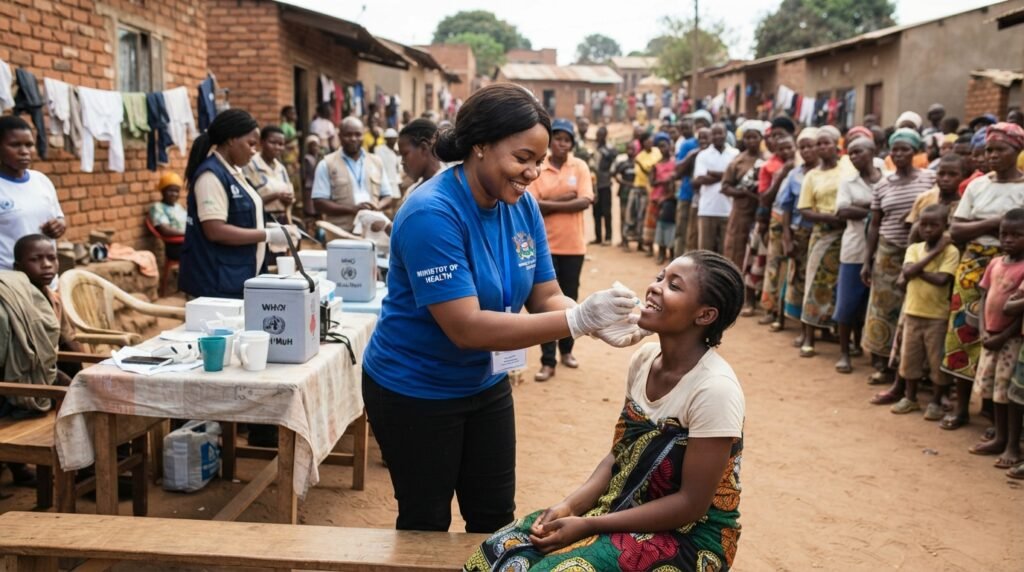
On October 30, 2026, the Malawi Ministry of Health and the World Health Organization (WHO) officially announced that they had achieved 100% coverage in a preventive oral cholera vaccine (OCV) second-dose campaign targeting high-risk areas in Blantyre. This achievement marks a transition from reactive outbreak response to a public health preventive system that strengthens long-term immunity among high-risk residents and fundamental prevention of waterborne diseases.
2025-2026 Cholera Outbreak Response and Milestone Timeline
According to an official press release from the WHO Regional Office for Africa on October 30, 2026, the Malawian government and WHO successfully reached 100% administrative coverage in five key high-risk zones in Blantyre. The campaign was conducted in August 2026 as part of a three-phase oral cholera vaccine (OCV) initiative launched in response to the 2025-2026 cholera outbreak in Malawi.
While the initial phase-one and phase-two reactive vaccinations focused on urgent intervention to break the rapid chain of transmission, the phase-three Blantyre campaign held in August was designed to provide a second dose to high-risk residents who have been consistently exposed, thereby fostering robust, long-term herd immunity.
186,108 Individuals Vaccinated Across 5 High-Risk Zones
According to the WHO report, this second-dose campaign focused on five core areas within Blantyre designated as Priority Areas for Multi-sectoral Intervention (PAMI). By ensuring residents who received the first dose completed the second, health authorities significantly extended the duration of antibody protection.
The five target areas and detailed results are as follows:
- Priority Intervention Areas: Five districts including Chemusa, Chirimba, Chilobwe, Suya, and Mpemba.
- Total Vaccinated: 186,108 people (achieving 100% administrative coverage against the target).
- Method of Vaccination: Long-term immunity reinforcement through a second dose of oral cholera vaccine (OCV).
WHO Provides $120,000 in Financial Support and Technical Oversight
The WHO provided comprehensive technical guidance and resource mobilization to ensure the success of this campaign. WHO supported the entire process, from operational planning and vaccine deployment to logistics coordination, field supervision, and Emergency Operations Center (EOC) management.
Furthermore, the WHO directly mobilized $120,933 USD to secure field implementation budgets. Working in tandem with the Malawi Ministry of Health, they established systems for Adverse Events Following Immunization (AEFI) reporting, operated real-time monitoring systems, and conducted multifaceted social mobilization activities.
Engagement of Traditional and Religious Leaders Enhances Community Acceptance
A key factor in the campaign’s high participation rate was the proactive involvement of community leadership. Alongside health workers, traditional tribal leaders, religious figures, local government officials, and community volunteers actively addressed misconceptions and encouraged residents to volunteer for vaccination.
This grassroots approach fostered a sense of ownership within the community, resulting in the successful achievement of full coverage across all five high-risk zones.
Downward Trend in Infections and Malawi’s Declaration of Outbreak Containment
The effectiveness of the preventive vaccination was immediately reflected in improved local health indicators. Following the intervention, cholera transmission in the Blantyre region showed a steady decline, and the surge in new cases subsided into a stable downward trajectory.
Buoyed by these public health successes, the Malawi Ministry of Health was able to declare the official end of the cholera outbreak on August 31, 2026. By going beyond temporary suppression and completing the second dose for high-risk populations, the government established a protective barrier to prevent future recurrences.
Post-Campaign Coverage Surveys and Future Surveillance Goals
Beyond the completion of the vaccinations, the WHO and Malawian health authorities are supporting post-campaign coverage survey data collection. The goal is to verify the efficacy of the intervention and build a database for long-term health policies aimed at protecting high-risk populations.
Based on this evidence-based data, health authorities plan to continue efforts to improve water and sanitation infrastructure for vulnerable populations, establishing a sustainable, cholera-free health safety net.
Official Source and Information
This article is based on the official press release published by the World Health Organization (WHO) Regional Office for Africa on October 30, 2026.