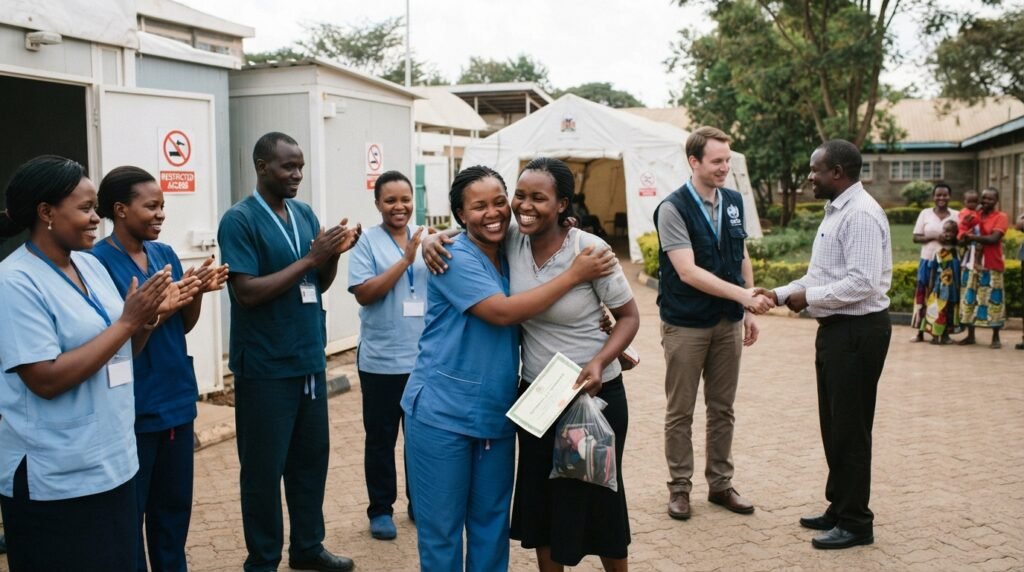
The World Health Organization (WHO) and the Kenyan Ministry of Health officially announced on November 11, 2026, that the country’s last Ebola patient has fully recovered and been discharged. With zero active cases and no individuals currently in quarantine 37 days after the first confirmed case, health authorities have officially initiated a 42-day period of heightened surveillance—twice the maximum incubation period of the virus—to monitor for any potential new cases.
Last Ebola Patient Discharged and 42-Day Countdown Begins
Aden Duale, Cabinet Secretary for the Kenyan Ministry of Health, announced at a briefing at Afya House in Nairobi on November 11 that the final patient has been cleared of the virus and has returned home to their family. On the same day, the final 11 individuals under monitoring were also cleared from quarantine and returned home.
Kenya began its 42-day observation period on Thursday, November 12, 2026. Given that the maximum incubation period for the Ebola virus is 21 days, public health protocols require a period twice that length without any new infections before an outbreak can be officially declared over. If no new cases occur, Kenya is expected to officially declare the end of the Ebola outbreak on December 23, 2026.
Dr. Abdourahmane Diallo, Program Manager at the WHO Regional Office for Africa, speaking on behalf of the Acting Regional Director Dr. Mohamed Janabi, congratulated the survivors on their successful reintegration into society. Dr. Diallo also commended the Kenyan government for its transparency and rapid response efforts, while expressing gratitude for the professionalism and bravery of the healthcare workers who risked their lives to provide care on the front lines.
Timeline: 37 Days of Response Since the First Confirmed Case
The outbreak of the Bundibugyo virus disease (BDBV) in Kenya began on October 6, 2026, when a Kenyan traveler who had visited the Democratic Republic of the Congo (DRC) and returned via Uganda tested positive. Following the first case, Kenyan health authorities and epidemiological teams immediately traced and identified 135 close contacts both domestically and internationally.
These contacts were monitored daily by health professionals in facilities or under observation. Subsequently, eight additional individuals from this group tested positive. Four were family members of the index patient, and four were healthcare workers who had treated the patient before the Ebola diagnosis was suspected. This brought the cumulative number of confirmed cases in Kenya to nine.
Tracing 135 Close Contacts and Containing Further Spread
Health officials noted that all eight secondary cases were already in strict quarantine before they began showing symptoms. This rapid contact tracing and immediate isolation prevented the virus from spreading into the community. The most recent case in Kenya was confirmed on October 19, and no new infections have been reported since.
Of the nine total confirmed cases, seven have recovered and been discharged. Following the discharge of the first five survivors on November 3, a sixth patient was discharged on November 6, and the final patient was cleared on November 11. The WHO and authorities expressed their deepest condolences to the families of two patients who passed away during the initial stages of treatment. Treatment and quarantine protocols were managed through the collaboration of Kenyatta National Hospital, The Nairobi Hospital, and local government health services.
42-Day Observation and Emergency Surveillance
Even with the discharge of the last patient, Kenyan health authorities have stated that they are maintaining a state of high alert. Secretary Duale emphasized that the start of the 42-day countdown does not mean the response efforts are over, confirming that Rapid Response Teams across every county will remain on standby. The government will continue to prioritize investigating all suspicious reports while providing ongoing support and post-recovery monitoring for survivors.
The WHO continues to monitor the situation in the neighboring Democratic Republic of the Congo, where the Ebola epidemic has resulted in over 11,000 cases and 5,000 deaths. However, in accordance with international health regulations, the organization does not currently recommend any restrictions on trade or travel. Secretary Duale affirmed that Kenya remains open for tourism, trade, and travel. Citizens are urged to report symptoms such as fever, muscle pain, vomiting, diarrhea, or bleeding by calling the toll-free hotline ‘719’.
Official Sources and Data
This report is based on the official press release issued by the World Health Organization Regional Office for Africa on November 11, 2026.