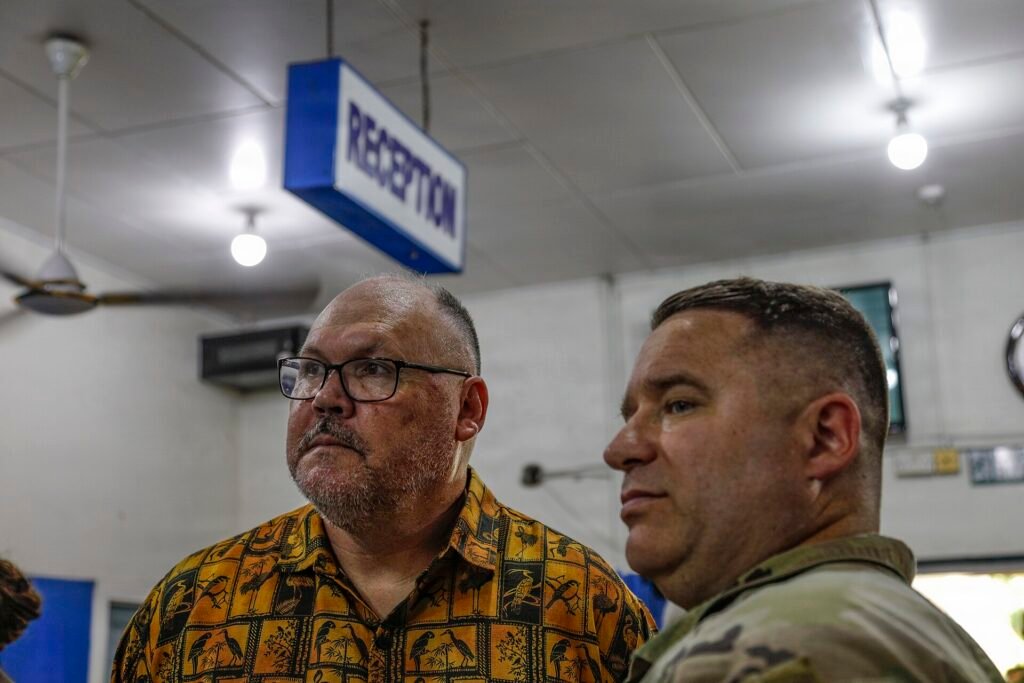
U.S. Army SETAF-AF by Staff Sgt. Catessa Palone · PUBLIC DOMAIN · Wikimedia Commons · Source
The World Health Organization (WHO) and the Government of Ghana have officially reaffirmed a comprehensive support plan to address delays in emergency patient transport and overhaul the national health response system. This collaboration focuses on strengthening the connectivity between frontline healthcare facilities and major hospitals, while eliminating gaps in emergency medical services.
Ghana Medical Association Annual General Conference and Emergency Response Reform
During the 68th Annual General Conference of the Ghana Medical Association (GMA) held at Central University, Miotso, Greater Accra Region, on November 6, 2026, Dr. Fiona Braka, WHO Representative to Ghana, expressed continued support for the Ghanaian government’s efforts to strengthen emergency care and referral systems. The conference was attended by key health leaders and medical experts, including President John Dramani Mahama and Minister of Health Kwabena Mintah Akandoh, to discuss reimagining Ghana’s emergency response system and addressing ‘The No Bed Syndrome’.
WHO Emergency Care System Framework and 5 Strategic Priorities
In her speech, Dr. Braka emphasized that emergency care acts as a chain that must be seamlessly connected from the patient’s transport from the street to hospital bed allocation, noting that the weakest link dictates the patient’s survival. To improve this, the WHO proposed five priority areas: timely patient assessment and stabilization, improved referral coordination, strengthened hospital bed management, investment in the emergency workforce, and increased accountability through reviews of emergency deaths and referral outcomes. Furthermore, she noted that the WHO is providing technical support for the finalization of Ghana’s National Referral Policy and the development of the 2024–2030 National Healthcare Quality Strategy.
Digital Pilot Project: Integrated Bed Management and Referral Coordination System (IBMRC)
The conference highlighted the digital Integrated Bed Management and Referral Coordination System (IBMRC) initiative introduced by the Ghana Health Service. This system was developed to provide real-time visibility into the capacity of hospitals, ensuring appropriate patient transfers. Current pilot participants include the Korle Bu Teaching Hospital, Komfo Anokye Teaching Hospital, Tamale Teaching Hospital, Greater Accra Regional Hospital, the 37 Military Hospital, the University of Ghana Medical Centre, and the National Ambulance Service.
President’s Plan for Emergency Infrastructure Expansion and Ambulance Procurement
President Mahama criticized the practice of turning away patients due to a lack of available beds, emphasizing that hospitals must evaluate and stabilize patients within their capacity before coordinating safe transfers. He also announced plans to increase emergency bed capacity in major hospitals to at least 10% of their total functional bed capacity. Consequently, emergency beds at Korle Bu Teaching Hospital will increase from 65 to at least 150. The government will also procure 100 new ambulances and repair 100 existing ones to improve operational rates, while opening up the Ghana Armed Forces’ intensive care and emergency hospital units to the public to supplement national emergency capacity.
Domestic Vaccine Self-Sufficiency Roadmap and Future Challenges
Beyond emergency care reform, President Mahama reaffirmed the goal of achieving vaccine self-reliance by 2030, transitioning away from Gavi support. Currently, Ghana self-finances approximately 50% of its required vaccines. GMA President Prof. Ernest Yorke noted that in addition to bed capacity, health personnel, equipment, and essential services must be bolstered, and stressed that there must be clear accountability for delays and smooth communication between referral and receiving facilities.
- Announcement Date: November 6, 2026 (Reported based on official publication date of November 11, 2026)
- Key Attendees: Dr. Fiona Braka (WHO Representative to Ghana), John Dramani Mahama (President of Ghana), Prof. Ernest Yorke (GMA President)
- Key Tasks: Finalizing the National Referral Policy, expanding the IBMRC digital system pilot, expanding emergency bed capacity by 10%+, and procuring/repairing 200 ambulances
- Vaccine Goal: Achieve full domestic funding and self-sufficiency by 2030 following the end of Gavi support
Official Source List:
– World Health Organization (WHO), “WHO reaffirms support for Ghana to strengthen emergency care and referral systems”, Published November 11, 2026, https://www.afro.who.int/en/countries/ghana/news/who-reaffirms-support-ghana-strengthen-emergency-care-and-referral-systems