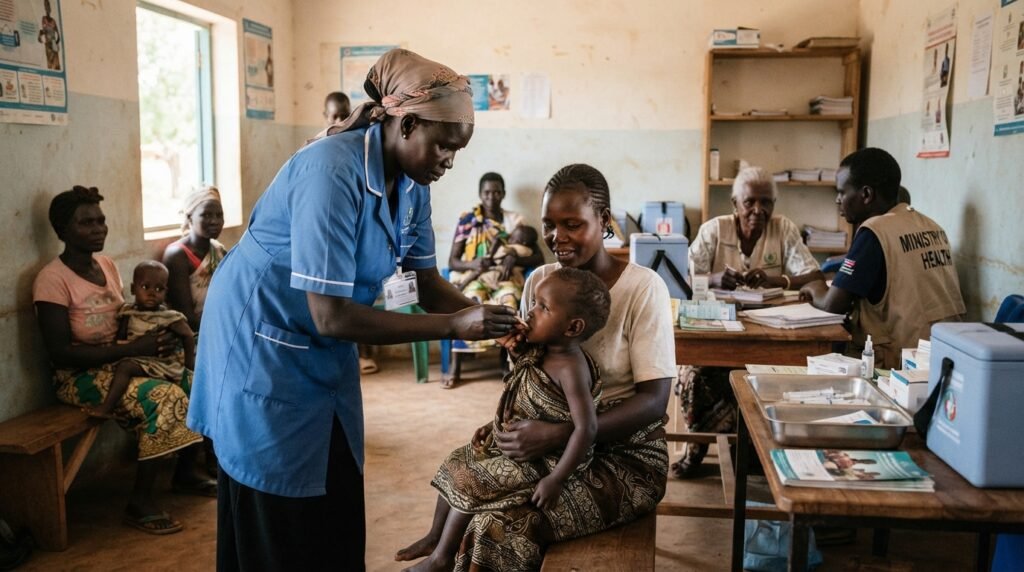
The South Sudanese Ministry of Health and the World Health Organization (WHO) officially approved new national immunization policy guidelines on November 9, 2026, to systematically plan and manage immunization services across the life course. This measure replaces the previous national immunization policy established in 2009 and is expected to serve as a foundation for strengthening public health by incorporating decades of advancements in vaccine science and digital health.
A Comprehensive Policy Overhaul After 17 Years
The South Sudanese Ministry of Health announced that, in close collaboration with domestic and international partners, it has finalized the new Expanded Program on Immunization (EPI) policy guidelines. The 2009 policy it replaces was limited in its ability to address the rapidly evolving global health landscape and current trends in new vaccine introduction.
The new guidelines align with the latest international health commitments, including the Immunization Agenda 2030 (IA2030), the Sustainable Development Goals (SDGs), and Universal Health Coverage (UHC). Furthermore, they have been integrated with key national health documents, including the South Sudan National Constitution, the National Health Sector Strategic Plan, the Primary Health Care Strategy, and the National Immunization Strategy (2023–2027) to enhance practical effectiveness.
Systematic Governance and a Comprehensive Policy Framework
The approved policy document provides a comprehensive framework covering the planning, governance, financing, implementation, regulation, monitoring, and continuous improvement of vaccine services. Dr. George Awzenio Legge, EPI Manager at the South Sudanese Ministry of Health, explained that the policy was designed based on core principles such as equity, country ownership, evidence-based decision-making, quality, accountability, community engagement, integration with primary health care, sustainability, innovation, and resilience.
Furthermore, key objectives of the policy include strengthening governance and sustainable financing, ensuring equity in immunization services across the life course, upgrading health human resources, supply chains, surveillance systems, and data systems, fostering vaccine demand and community engagement, and promoting research and innovation.
Challenges and Practical Improvements in South Sudan’s Healthcare Field
Dr. Mutale Nsakashalo, Health Cluster Lead at the WHO South Sudan office, pointed out that many children remain unprotected by vaccines due to distance, service disruptions, and resource shortages. South Sudan has faced complex challenges, including regional disparities in vaccination rates, high numbers of zero-dose and under-vaccinated children, recurring disease outbreaks, security instability, population movement, fragile health infrastructure, a shortage of skilled health workers, and an over-reliance on external funding.
Nevertheless, South Sudan has made progress in recent years by introducing malaria and measles vaccines into the routine immunization program, improving disease surveillance systems, and strengthening the cold chain system. Building on this progress, these guidelines will provide practical guidance for service delivery, vaccine management, and partner coordination.
Future Implementation and Monitoring Systems
Stakeholders involved in the final approval process have committed to building a policy framework that helps ensure every child and community is protected from vaccine-preventable diseases. The Ministry of Health and WHO plan to dedicate efforts to field implementation, ensuring results are monitored at every administrative level with clear accountability to ensure no one is left behind.
Official Source List:
- WHO Regional Office for Africa Press Release (November 9, 2026, ‘South Sudan validates new immunization guidelines to protect every child and community’)