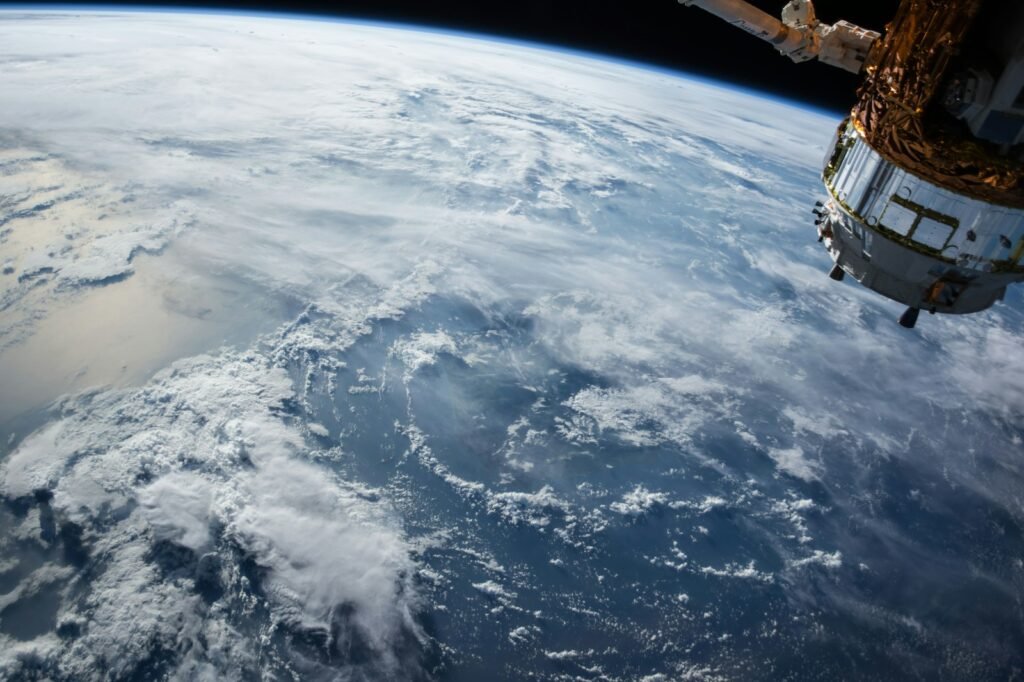
Unsplash
Privatizing Low Earth Orbit: NASA’s Final RFP Release
On October 9, 2026, NASA officially released the final Request for Proposals (RFP) for the development and operation of next-generation commercial space stations. This initiative is set to take over continuous human habitation and scientific research in Low Earth Orbit (LEO) once the International Space Station (ISS) is retired. This announcement marks a historical turning point as a long-standing government-led outpost transitions into a fully commercialized space ecosystem.
NASA Administrator Jared Isaacman stated in the official announcement, “NASA will never abandon its presence in Low Earth Orbit,” adding, “Commercial space stations will enable NASA to focus our efforts on deep space exploration missions to the Moon and Mars, while simultaneously offering unprecedented commercial opportunities for the U.S. and global space industries.”
This final RFP was established by comprehensively incorporating feedback from private companies gathered since the ‘Ignition’ event earlier this year, followed by the Request for Information (RFI) in March and the release of a draft RFP and industry briefings in July.
Contract Structure: Firm-Fixed-Price and IDIQ, Plus Timeline
According to the project schedule provided by NASA, interested private companies must submit their final proposals by December 8, 2026. Following an evaluation, NASA plans to select the final contractors and execute formal agreements by the spring of 2027.
The procurement will follow an Indefinite-Delivery, Indefinite-Quantity (IDIQ) contract structure based on Firm-Fixed-Price terms. A phased approach will be employed: initial development and certification contracts will be awarded to two or more companies to foster technical competition, followed by competitive task orders for final design, testing, and service operations.
Selected companies will not merely manufacture modules but will be responsible for providing ‘end-to-end’ commercial LEO services to both NASA and private customers, covering everything from astronaut transport to station operations and logistics.
A New Frontier for Biotech, Materials, and Investment
The emergence of commercial space stations is expected to bring profound economic ripples beyond aerospace engineering, impacting global finance, industry, and the general public. The microgravity environment of LEO is gaining attention as a premier laboratory for cutting-edge industries such as protein crystallization, high-purity semiconductor material synthesis, and regenerative medicine.
First, in the pharmaceutical and biotech sectors, analyzing protein structures without gravity interference can drastically shorten the development timeline for treatments for intractable diseases. As commercial stations become operational, lower costs for orbital experiments could lead to reduced drug prices and medical innovation.
Second, the spectrum of space tourism and general commercial markets will expand rapidly. Beyond serving as NASA research hubs, these stations will be open to private researchers, space tourists, and commercial film and manufacturing facilities. This will stimulate venture capital investment in aerospace and create new high-value jobs.
Impact on Global Space Ecosystems and Future Challenges
NASA’s final RFP release is poised to influence the private space ecosystems in South Korea and Japan directly. It opens new supply chain opportunities for East Asian space startups and component manufacturers collaborating with JAXA and the Korea Aerospace Administration (KASA).
Korean space biotech ventures and satellite component manufacturers, alongside Japanese firms specializing in robotics and modularization, are looking to enter the global space supply chain in line with this shift toward commercialization. Increased availability of commercial stations is expected to stimulate the growth of integrated space industries through more opportunities for payload validation and joint research.
However, significant uncertainties remain. As noted by NASA, for these commercial stations to be sustainable, they cannot rely solely on NASA as their only public customer; they must secure their own commercial revenue models and diverse client bases. Furthermore, safety verification, legal liability, and the massive initial capital requirements remain critical variables to be addressed throughout the execution process.
Official Sources and Further Reading
This article is based on the official press release from NASA.
- NASA Seeks US Industry Plans for Commercial Space Stations (Published: October 9, 2026)
- NASA Announces Bold Science Initiatives for America’s Golden Age Summit (Published: October 8, 2026)